22 Sep 2026
Demographic Shifts Among Participants in Hybrid Online Entertainment Ecosystems
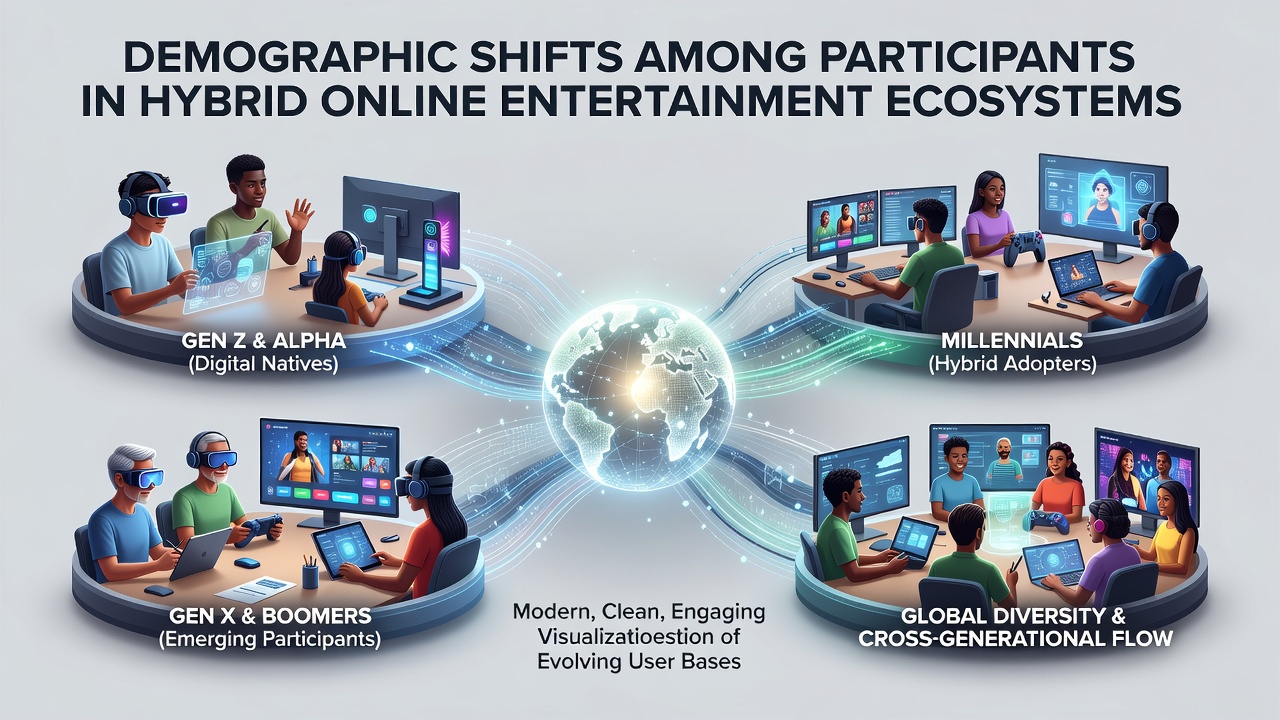
Hybrid online entertainment ecosystems combine elements of gaming, live streaming, social interaction, and interactive content delivery on unified digital platforms, and researchers have tracked notable changes in participant demographics over recent years. Data from multiple studies show that these platforms attract users across broader age ranges than traditional single-format services, while shifts in geographic distribution and cultural participation continue to reshape audience profiles. According to reports from Pew Research Center, participation rates among adults aged 35 to 54 rose steadily between 2020 and 2025, driven by improved mobile access and integration of real-time features that blend passive viewing with active engagement.
Platform operators record user data that reveals younger cohorts still form the largest segment, yet growth among older adults has accelerated as hybrid systems incorporate accessible interfaces and cross-generational content libraries. Studies indicate that individuals in the 18 to 24 age bracket maintain high engagement levels with competitive and collaborative features, whereas those aged 45 and above show increased activity in community-driven events and narrative-based experiences. Observers note that these patterns reflect wider adoption of broadband infrastructure in suburban and rural areas, which has reduced previous barriers tied to location and device availability.
Regional and Cultural Participation Patterns
Geographic data collected by government agencies demonstrate that participation in hybrid ecosystems has expanded beyond North American and European markets into Asia-Pacific and Latin American regions at faster rates since 2023. Figures from Statistics Canada highlight a 28 percent increase in monthly active users from diverse ethnic backgrounds within Canada alone, while similar trends appear in reports tracking Australian digital media consumption. Cultural factors influence content preferences, with users in multilingual households favoring platforms that support real-time translation and localized community tools.
Gender distribution has moved closer to parity in several measured markets, although specific genres within hybrid ecosystems retain distinct imbalances. Research compiled by Eurostat on digital leisure activities shows that female participation in collaborative storytelling and social simulation modules grew by 19 percent from 2022 to 2025, while male users continue to represent higher shares in competitive simulation environments. These variations do not remain static, since platform algorithms that recommend cross-genre content contribute to gradual diversification of user bases over time.
Technological and Economic Influences on User Profiles
Advances in cloud computing and low-latency networks have enabled seamless participation for users with varying hardware capabilities, which in turn broadens demographic reach. Economic analyses point to subscription models and microtransaction systems that accommodate different spending capacities, allowing lower-income participants to engage through free tiers while premium features attract higher earners. Data collected across multiple jurisdictions reveal that education levels among active users skew toward secondary and post-secondary completion, yet accessibility improvements have begun to include those with limited formal schooling through intuitive design elements.
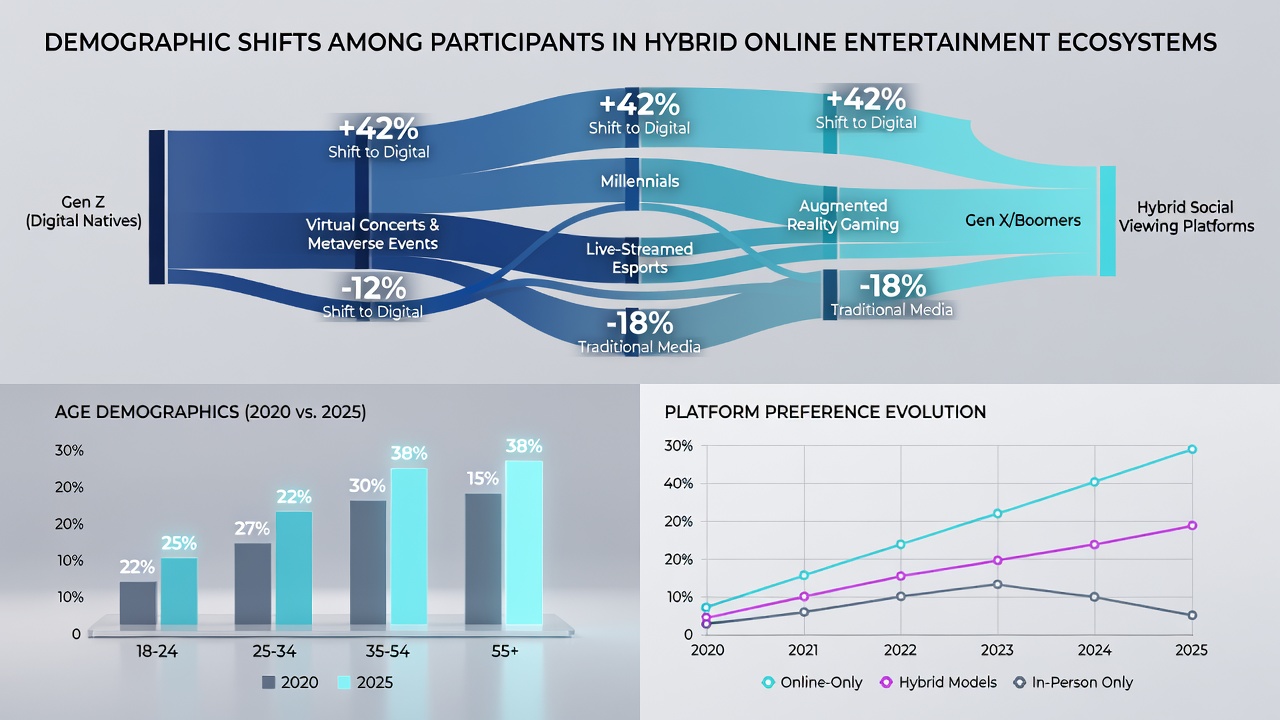
Seasonal events scheduled for September 2026 are projected to draw record numbers of first-time users from emerging markets, according to industry forecasts that incorporate census-linked digital usage statistics. These events typically feature global tournaments and collaborative challenges that encourage cross-border interaction, further altering the geographic mix of participants. Platform analytics indicate that returning users from prior years tend to introduce new demographics through referral mechanisms, creating organic expansion beyond initial marketing targets.
Long-Term Trends and Measurement Challenges
Longitudinal studies face difficulties in tracking hybrid ecosystem participation because users often maintain multiple accounts across interconnected services, which complicates efforts to produce precise demographic snapshots. Nevertheless, aggregated anonymized datasets from academic institutions show consistent upward trajectories in adult and middle-aged cohorts through 2025. Economic pressures such as device affordability and data plan costs continue to shape participation rates in lower-income regions, whereas regulatory frameworks in various countries influence content availability and age verification processes.
Cross-platform interoperability features introduced in recent updates have allowed participants to carry progress and social connections between services, reducing friction for users who previously abandoned accounts due to fragmented experiences. This development coincides with rising interest from non-traditional demographics, including retired individuals who engage during daytime hours and parents who participate alongside family members. Evidence from national statistical offices in multiple countries supports the observation that hybrid ecosystems function as social connectors that transcend conventional entertainment boundaries.
Conclusion
Demographic shifts within hybrid online entertainment ecosystems reflect broader technological, economic, and cultural changes that continue to unfold. Participation patterns documented through 2025 and projected into September 2026 demonstrate expansion across age groups, geographic regions, and cultural backgrounds, supported by infrastructure improvements and platform design choices. Continued data collection from government agencies and research organizations will provide further clarity on how these ecosystems evolve and which populations gain or maintain access over time.